

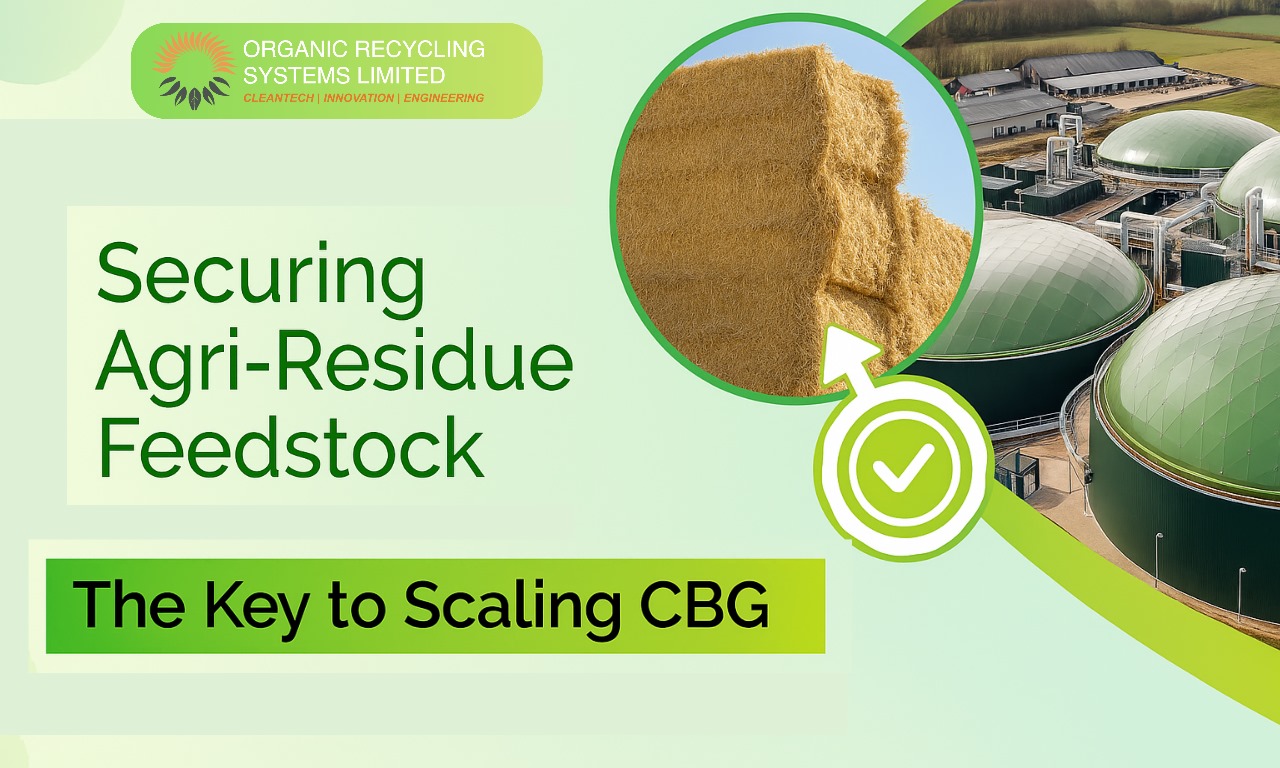
India’s bioenergy sector is witnessing a rapid transformation with the rise of renewable energy solutions like biogas plants and biomass energy projects.
A critical success factor in scaling these projects lies in securing reliable feedstock. Seasonal variations in agri-residue availability, logistics challenges, and competing uses often disrupt operations.
With initiatives such as GOBARdhan and the Biomass Aggregation Machinery (BAM) subsidy, both policymakers and industry leaders are prioritizing sustainable feedstock models. Dedicated crops like Napier grass, alongside efficient solid waste management practices, are emerging as solutions for operational continuity, cost stability, and scalable biomethane production.
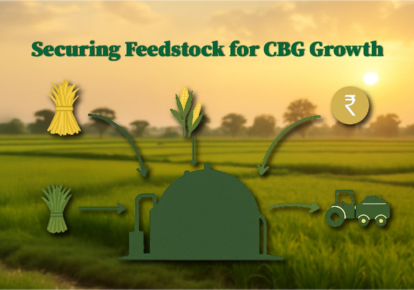
Feedstock Challenges in CBG & Biogas Projects
- Seasonality: Agri-residues like paddy straw, maize stalks, and sugarcane trash are available only during specific harvesting cycles.
- Logistics Costs: Collecting and transporting biomass across fragmented farmlands increases project costs.
- Competing Demand: Residues are also used for cattle feed, composting, and bio composting technology, creating pressure on availability.
- Variable Quality: Inconsistent calorific values and contamination affect anaerobic digestion systems and gas yield.
To make biogas plants, biomethanation plants, and biodiesel feedstock projects financially viable, developers must adopt integrated feedstock strategies.
Government Push: GOBARdhan & BAM Subsidy
- GOBARdhan Scheme: Promotes biogas, biomethane gas, and fermented organic manure by supporting village-level organic recycling systems. It also tackles stubble burning and strengthens rural economies.
- Biomass Aggregation Machinery (BAM) Subsidy: Encourages investment in balers, rakers, loaders, and other recycling technologies to improve biomass collection, storage, and transport efficiency.
These schemes, combined with EPC services, PMC services, and consulting services, are helping bioenergy companies build bankable models for biomethanation processes and dry anaerobic digestion systems.
Napier Grass: A Reliable Alternative Feedstock
Beyond seasonal residues, Napier grass (elephant grass) is gaining popularity as a bioenergy feedstock and dedicated biogas plant input.
Key Advantages:
- Year-Round Supply: Multiple harvest cycles ensure continuous biomass input for anaerobic digestion processes.
- Cost Efficiency: Low input requirements and localized cultivation reduce dependence on fragmented collection.
- Stable Gas Output: Uniform quality ensures consistent biomethane production.
- Sustainability: Improves soil fertility and integrates with bio composting technology.
Napier grass can help developers achieve energy security for biogas plants.
Strategic Models for Feedstock Security
To strengthen feedstock availability, waste audit companies and project developers can adopt a hybrid approach:
- Village Aggregation Hubs: Establish collection centers for crop residues supported by BAM subsidies.
- Contract Farming & Lease Models: Grow Napier grass on marginal lands through partnerships with farmers.
- Storage Infrastructure: Create silage pits and bale warehouses to buffer lean periods.
- Expert Partnerships: Engage engineering services, consulting services, and laboratory services for feasibility reports, waste audits, and project optimization.
Conclusion
The future of biogas plants, biomass energy projects, and renewable energy solutions will depend on how effectively developers secure their feedstock. By leveraging government schemes, collaborating with aggregation companies, and integrating crops like Napier grass, India can achieve scalable biomethane gas production.
A strong feedstock sourcing model, supported by EPC services, PMC services, feedstock audits, and bio composting technologies, ensures long-term success in the waste management sector. Ultimately, solid bioenergy and biomass integration are not just about handling residues—they are about creating a sustainable circular and green economy powered by organic recycling systems.
Connect with Organic Recycling Systems
📞 Contact: 022-41702222
✉️ Email: info@organicrecycling.co.in 💼 Connect with Us on LinkedIn!
FAQ – Securing Agri-Residue Feedstock for Scaling CBG
1. What is the main focus of this article?
The blog explains why securing a reliable agri-residue feedstock supply is crucial for scaling CBG and biogas plants, addressing challenges like seasonal availability, logistics, and competing uses, and highlighting strategies to overcome them.
2. Why is reliable feedstock important for CBG projects?
Reliable feedstock is essential because inconsistent supply affects biomethane production, plant operation continuity, cost structures, and overall viability of biogas and biomethanation plants.
3. What are the biggest challenges with agri-residue feedstock?
The main challenges include:
-
Seasonality of crop residues such as paddy straw, maize stalks, sugarcane trash
-
High logistics and collection costs from fragmented farmlands
-
Competing demand for crop residues (e.g., cattle feed, composting)
-
Variable quality and contamination of feedstock affecting biogas yields.
4. What government initiatives support feedstock supply?
Initiatives such as the GOBARdhan Scheme and Biomass Aggregation Machinery (BAM) subsidies encourage the adoption of biomass collection technologies (like balers and loaders) and community-based recycling systems to support feedstock supply for biogas and CBG plants.
5. How does the GOBARdhan Scheme help CBG and biogas projects?
GOBARdhan promotes production of biogas, biomethane gas, and organic manure, supports village-level organic waste systems, and helps reduce practices like stubble burning — ultimately strengthening local rural economies and biomass feedstock availability.
6. What is the Biomass Aggregation Machinery (BAM) subsidy?
The BAM subsidy incentivizes investment in biomass collection, storage, and transport machinery such as balers, rakers, and loaders, improving the logistics and efficiency of agri-residue supply to CBG plants.
7. Why are crops like Napier grass considered useful feedstock?
Crops such as Napier grass provide a year-round biomass supply with consistent quality, helping to mitigate seasonal shortages and ensuring operational continuity for anaerobic digestion systems.
8. What feedstock strategies can strengthen supply security?
Effective strategies include:
-
Establishing village aggregation hubs for crop residue collection
-
Contract farming and lease models for dedicated feedstock crops
-
Storage infrastructure like silage pits and bale warehouses
-
Expert partnerships for project planning, waste audits, feasibility reports, and supply chain optimization.
Seasonal agricultural cycles result in feedstock being available only at specific times (e.g., post-harvest), requiring storage solutions and year-round sourcing models to maintain consistent CBG production.
10. Can feedstock issues impact gas yield?
Yes — inconsistent feedstock quality and contamination can lower efficiency in anaerobic digestion systems, reducing biomethane gas output and affecting plant performance.
11. Are there competing uses for agri residues?
Crop residues are also used for cattle feed, composting, bio composting technologies, and sometimes burned in fields — creating pressure on supply for CBG and biogas feedstock.
12. How can engineering and consulting services help?
Engineering services, consulting services, and specialized laboratory services can assist with feasibility studies, waste audits, supply chain design, and technical optimization to create bankable, scalable CBG plant models.
13. Is feedstock the only factor for scaling CBG?
While essential, feedstock must be supported by strong collection and storage infrastructure, effective supply chain strategies, technology choices like dry anaerobic digestion systems, and supportive policies for long-term success.
14. What role do storage facilities play?
Storage infrastructure such as bale warehouses and silage facilities helps buffer seasonal fluctuations, preserving quality and providing a continuous feedstock supply for CBG production throughout the year.
15. What is the long-term vision for feedstock security?
The future of scalable CBG and biomass energy projects depends on integrated feedstock supply models that combine government support, crop diversification (e.g., Napier grass), community aggregation, strategic infrastructure, and collaboration across the value chain.