

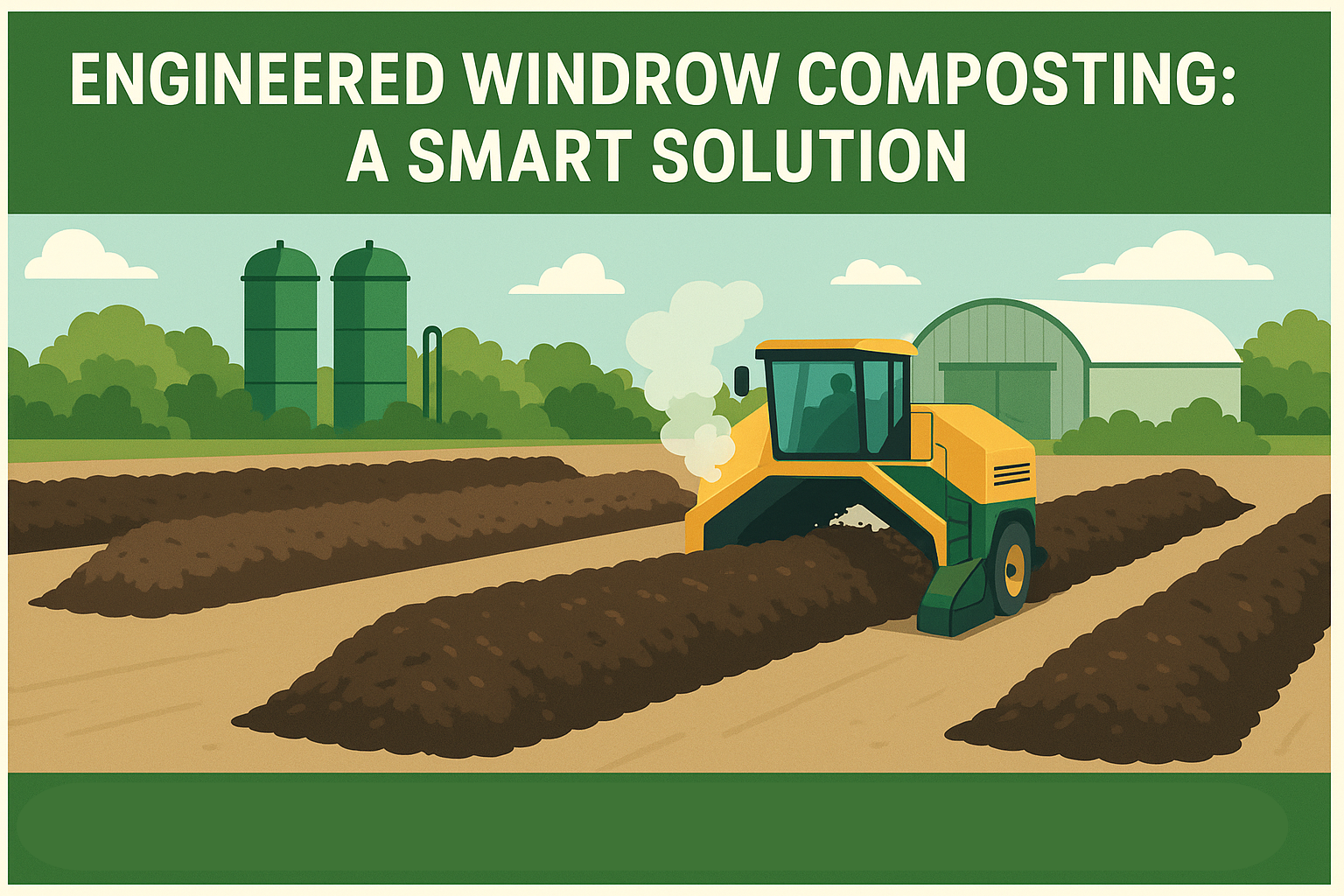
Engineered Windrow Composting
Converting Waste into Bioenergy and Compost
As India’s waste generation continues to rise, finding sustainable and affordable treatment solutions has become a national priority. While several technologies focus on energy recovery, composting remains one of the most natural and circular methods of handling organic waste.
Organic Recycling Systems Limited (ORS) — a pioneering bioenergy company in India — has engineered a smarter way to compost: the EW-Co™ (Engineered Windrow Composting) technology. Designed for large-scale waste processing, EW-Co™ transforms biodegradable waste into high-quality compost while minimizing environmental impact.
1. What Is Engineered Windrow Composting (EW-Co™)?
Engineered Windrow Composting is an enhanced and scientifically structured version of traditional composting. Unlike manual or unplanned setups, ORS’s EW-Co™ system integrates engineering precision with natural biodegradation.
It is specifically developed for handling Organic Fractions of Municipal Solid Waste (OFMSW) and segregated organic waste, ensuring higher efficiency, cleaner output, and compliance with India’s waste management standards.
2. ORS’s EW-Co™ Technology: Innovation with Practicality
ORS’s Engineered Windrow Composting (EW-Co™) is the result of years of research and field experience. As a leading bioenergy company in India, ORS has designed this system to combine affordability with environmental responsibility.
Key Features of EW-Co™:
- Low-Cost, Easy Operation: Simplified layout and process flow reduce setup and maintenance costs.
- Weather-Resilient Performance: Designed to operate efficiently under India’s diverse climate conditions.
- Pre-Segregation & Pulverizing: Ensures uniformity, reduces contamination, and prevents metal leaching.
- Integration-Ready: Seamlessly connects with segregation lines and post-processing systems.
- FCO-Compliant Compost: The output meets Fertilizer Control Order (FCO) standards, making it market-ready.
- Scalable for Large Projects: Ideal for capacities above 50 Tons Per Day (TPD), serving municipalities and industries.
3. The EW-Co™ Process: Simple, Sustainable, and Scalable
- Feedstock Preparation: Segregation and pulverizing remove non-biodegradables and prepare the organic waste.
- Windrow Formation: Waste is formed into long, narrow rows designed for optimal aeration.
- Turning and Aeration: Mechanical turners mix and aerate the composting material to maintain oxygen levels.
- Moisture & Temperature Monitoring: Regular checks ensure optimal microbial activity and pathogen control.
- Curing & Screening: The matured compost is screened and stored for agricultural or landscaping use.
This engineered system enhances biological efficiency while ensuring operational stability and odor control — two major challenges in large-scale composting.
4. Why Composting Matters for a Bioenergy Company
As a forward-thinking bioenergy company in India, ORS understands that true sustainability goes beyond just producing energy. Composting closes the organic loop by returning nutrients to the soil, improving land productivity, and reducing dependence on chemical fertilizers.
Through EW-Co™, ORS ensures that organic waste not only avoids landfills but is transformed into a resource that enriches soil health and supports India’s agricultural economy.
5. Technical and Environmental Benefits
Technical Advantages
- Designed as per windrow composting guidelines
- Compatible with segregated and unsegregated organic waste
- Integrates easily with existing waste processing systems
- Consistent and compliant compost output
Environmental Benefits
- Reduces methane emissions and landfill pressure
- Produces soil-enriching, natural compost
- Promotes carbon sequestration and sustainable agriculture
- Minimizes leachate generation through pre-segregation
6. Economic and Social Benefits
- Low Capital & Operating Costs: Compared to advanced mechanical systems, EW-Co™ offers a high ROI.
- Revenue from Compost Sales: Compost generated can be sold to farmers, landscapers, and horticultural users.
- Employment Generation: Supports local job creation in compost plant operations and distribution.
- CSR & ESG Alignment: Helps industries and municipalities meet sustainability mandates.
By choosing ORS’s composting solutions, organizations gain both environmental impact and economic efficiency — a balance that defines a truly successful waste management model.
7. Ideal Applications
EW-Co™ technology is suitable for:
- Municipal Solid Waste Processing Units (centralized composting 50–100 TPD)
- Industrial Parks & Food Processing Units
- Agricultural and Rural Development Projects
- Smart Cities and Urban Local Bodies
As a bioenergy company in India, ORS ensures that its composting systems complement other clean energy initiatives, including anaerobic digestion and biogas generation.
8. Compliance and Quality Standards
Every EW-Co™ installation meets:
- FCO (Fertilizer Control Order) compost standards
- CPCB and SWM Rules, 2016 guidelines
- Odor, leachate, and emission control protocols
- Regular operational audits for performance and environmental safety
This ensures ORS’s composting facilities are technically sound, legally compliant, and environmentally sustainable.
9. Why Choose ORS – India’s Trusted Bioenergy Partner
With more than a decade of experience in organic waste management, ORS stands among the most trusted bioenergy companies in India.
Why clients choose ORS:
- Proven expertise in large-scale composting and waste-to-energy systems
- End-to-end project execution — from design to operations
- Cost-effective and customizable solutions
- Compliance with Indian waste management and environmental regulations
- Continuous technical support and performance optimization
Conclusion: A Circular Path Toward Sustainability
At Organic Recycling Systems, we believe in transforming organic waste into opportunities for a cleaner and greener tomorrow.
Our EW-Co™ (Engineered Windrow Composting) technology reflects our vision as a bioenergy company in India committed to sustainable development and circular economy principles.
If you are a municipality, industrial unit, or large institution looking for a proven, low-cost, and eco-friendly waste solution — ORS can help.
👉 Contact us today to explore how Engineered Windrow Composting can turn your waste into wealth while building a sustainable future for all.
Connect with Organic Recycling Systems
📞 Contact: 022-41702222
✉️ Email: info@organicrecycling.co.in 💼 Connect with Us on LinkedIn!
FAQ – Engineered Windrow Composting (EW-Co™) Technology
1. What is Engineered Windrow Composting (EW-Co™)?
Engineered Windrow Composting (EW-Co™) is a structured, engineered version of traditional windrow composting designed to process large volumes of organic waste into high-quality compost using optimized layout, aeration, and monitoring.
2. How does EW-Co™ differ from traditional composting?
Unlike informal pile composting, EW-Co™ systems are engineered for efficiency, with standardized feedstock preparation, windrow formation, mechanical turning and aeration, and controlled moisture and temperature monitoring to ensure consistent compost quality.
3. What types of waste can EW-Co™ handle?
EW-Co™ is designed to process the organic fraction of municipal solid waste (OFMSW) and segregated organic waste, including food waste, yard waste, and other biodegradable materials typically generated by municipalities and industries.
4. What are the main steps in the EW-Co™ composting process?
The process generally includes:
-
Feedstock preparation (segregation and pulverizing),
-
Windrow formation (creating long compost rows),
-
Turning and aeration to maintain oxygen levels,
-
Moisture and temperature monitoring,
-
Curing and screening of finished compost.
5. What are the technical benefits of EW-Co™ technology?
EW-Co™ is designed according to best practices, can handle both segregated and unsegregated organic waste, integrates with existing waste processing systems, and produces a consistent, compliant compost output ready for agricultural or landscaping use.
6. What environmental advantages does EW-Co™ provide?
This technology helps reduce methane emissions and landfill pressure by diverting organic waste to composting, produces nutrient-rich, soil-enriching compost, promotes carbon sequestration, and minimizes leachate generation when pre-segregation is applied.
7. Can the compost from EW-Co™ be used commercially?
Yes. The compost produced meets quality standards (such as Fertilizer Control Order requirements in India) and can be sold to farmers, landscapers, and horticulture users, creating potential revenue.
8. What are the economic and social benefits of EW-Co™?
Engineered windrow composting has lower capital and operating costs compared to some advanced mechanical compost systems, offers high return on investment, generates employment, and aligns with corporate sustainability and municipal ESG goals.
9. Is EW-Co™ suitable for large-scale projects?
Yes. EW-Co™ is scalable and particularly suitable for centralized composting facilities with capacities above 50 tons per day, such as municipal solid waste processing units, industrial parks, and urban local bodies.
10. Does EW-Co™ help with climate and sustainability goals?
By diverting organic waste from landfills and turning it into compost that improves soil health and reduces dependence on chemical fertilizers, EW-Co™ supports circular economy principles and sustainable waste management efforts.
11. What is windrow composting in general?
Windrow composting is a method that places organic waste in long rows (windrows) and turns them periodically to aerate the material. Oxygen supply and microbial activity in windrows help transform organic matter into compost over time.
12. Why is aeration important in windrow composting?
Regular aeration, often achieved by turning the compost rows, supplies oxygen to the microbes breaking down organic matter, which speeds up decomposition and reduces odors and anaerobic conditions.
13. What end-products result from EW-Co™ composting?
The primary end-product is stabilized organic compost, a nutrient-rich soil amendment used to improve soil fertility and structure in agriculture, landscaping, and horticulture.
14. Can EW-Co™ integrate with other waste management systems?
Yes. EW-Co™ can be integrated with segregation lines and other post-processing systems in waste management facilities, enhancing overall efficiency and complementing broader waste processing workflows.
15. How does EW-Co™ support local communities?
By generating high-value compost, creating jobs, and reducing landfill use and methane emissions, EW-Co™ contributes to community sustainability, local agricultural productivity, and environmental health.