

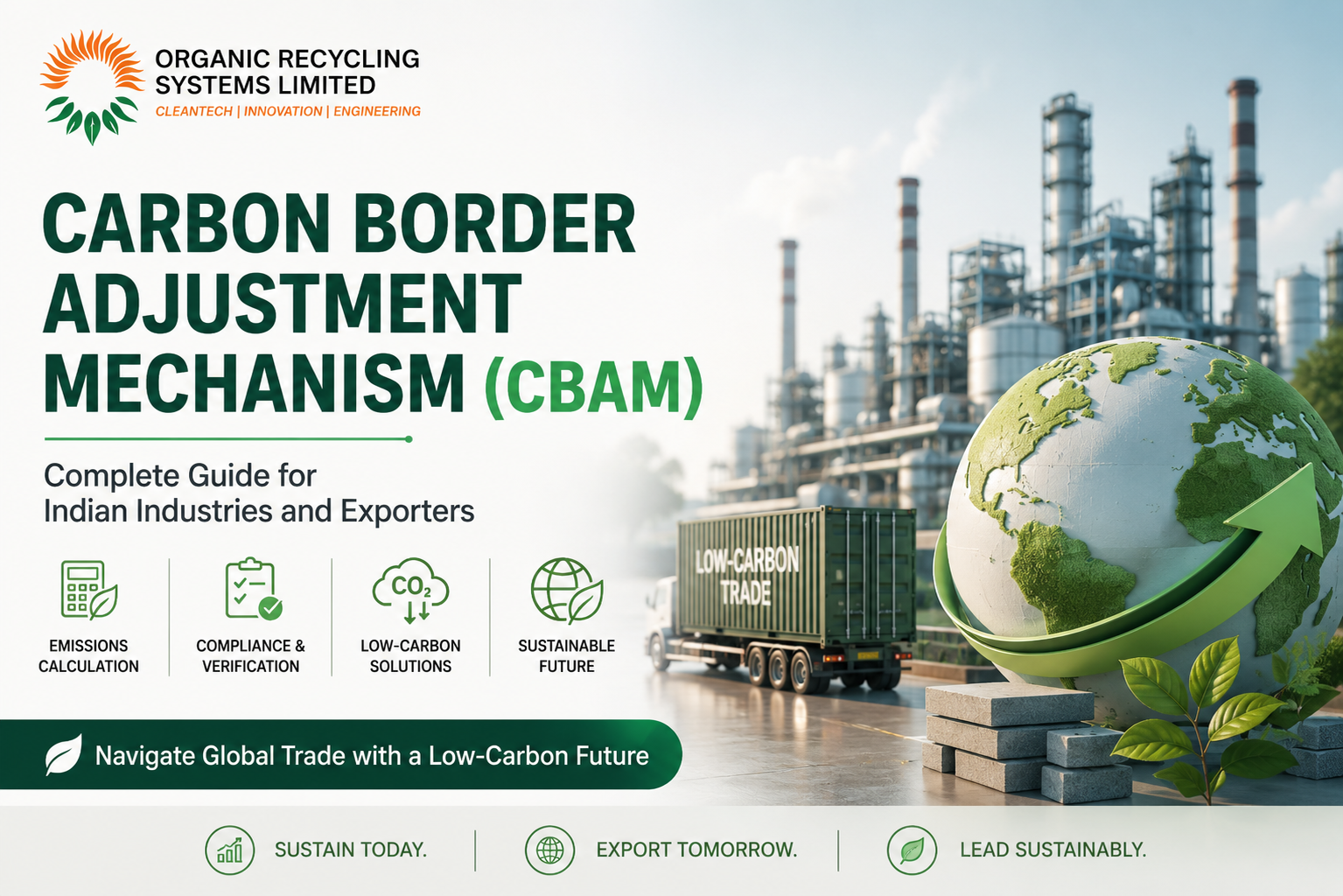
The low-carbon economy is transforming the trade of the world. Stricter environmental regulations by countries are forcing companies to change operations. One of the significant changes is the European Union’s Carbon Border Adjustment Mechanism (CBAM). Indian businesses, therefore, require an understanding of Carbon Border Adjustment Mechanism (CBAM) to continue their exports to Europe and continue earning foreign exchange.
You should be very concerned with CBAM Compliance if your company exports steel, aluminum, cement, fertilizers, hydrogen, or electricity to the EU. Early preparation would lessen compliance risks and enhance the transparency of your operations, and thus your position in international trade. Such companies would then be better placed to satisfy the evolving environmental expectations of the world and build confidence with their global customers.
This guide will walk you through What is Carbon Border Adjustment Mechanism, the functioning of the CBAM Reporting Process, the major CBAM Reporting Requirements, and the steps on the ground that businesses can take to ensure compliance.
What is Carbon Border Adjustment Mechanism (CBAM)?
The Carbon Border Adjustment Mechanism (CBAM) is a proposal to ensure that all products brought into the European Union face the same carbon charges as those that apply to products made within its territories. The fundamental purpose of this measure is to curb carbon leakage. Carbon leakage takes place when companies shift their production to other regions with lower environmental regulations relative to the European Union.
This helps them reduce their overall costs of doing business while increasing global carbon emissions and undermining efforts to fight climate change. In the finalized CBAM Regulation, importers of carbon-intensive products are required to declare greenhouse gas emissions resulting from the production of these goods.
Once this regulation is fully implemented, the same importers will purchase CBAM certificates equivalent to verified carbon emissions in their imports. This would put them in fair competition by imposing the same environmental standards on both domestic and foreign products and at the same time give impetus to cleaner industrial production in other countries.
For the businesses in CBAM India, this is a double-edged regulation that would make them more transparent and accurate in their emissions reporting on one front and push them further to invest in cleaner technology, improve energy efficiency, and adopt better practices for sustainable manufacturing. In addition, those that prepare early for CBAM Compliance will have a smoother entry into European markets and will also solidify their position as responsible, environmentally friendly global suppliers.
Why is the Carbon Border Adjustment Mechanism (CBAM) Important for Indian Exporters?
The European Union continues to be one of the most important markets for India’s industrial exports, and as regulations on the environment become more stringent, exporters have to show how clean their carbon is from their entire production process. The Carbon Border Adjustment Mechanism (CBAM) directly affects exporters dealing in sectors such as:
- Steel
- Iron
- Aluminium
- Cement
- Fertilizers
- Hydrogen
- Electricity
Non-compliance with the CBAM Reporting Requirements may result in more financial penalties and the detention of goods, as well as reduced competitiveness in the European market. At the same time, the companies that start preparing now can spare themselves future disruptions and enhance their sustainability credentials.
Many organizations are partnering with experienced teams of CBAM Consultants to understand reporting requirements, optimize emissions calculations, and build reliable compliance systems in addition to other elements of the regulation.
Understanding CBAM Reporting Requirements
The most important thing about the Carbon Border Adjustment Mechanism is the reporting of emissions. During the phase-in period, businesses must provide detailed reports on the greenhouse gas emissions related to the products they export.
This has the information of processes of production, direct emissions, electricity consumption, and any applicable indirect emissions, along with all supporting documentation used for calculations. Proper reporting enhances transparency and prepares firms for future financial obligations under the CBAM Regulation.
Working with specialists offering CBAM Services enables exporters to establish sound data collection systems, keep documentation, and minimize reporting mistakes that might trigger regulatory problems.
CBAM Timeline for Businesses
| Phase | Timeline | Business Requirement |
| Transition Phase | 2023–2025 | Submit quarterly CBAM Reporting without purchasing certificates. |
| Full Implementation | From 2026 | Importers begin purchasing CBAM certificates based on verified emissions. |
| Continuous Compliance | Ongoing | Maintain accurate emissions data, verification, and regulatory reporting for every eligible export. |
CBAM Reporting Process Explained
Understanding the CBAM Reporting Process would help businesses have their documentation in shape and stay away from the claws of compliance. It starts with the identification of the products falling under the purview of the regulation. Companies need to gather information on production, calculate embedded greenhouse gas emissions, verify the collected data, and prepare reports as per the European reporting standards.
The CBAM Reporting Process is significantly comprised of CBAM Emission Calculation, which includes the measurement of emissions from manufacturing, fuel consumption, energy use, and other industrial activities. Accurate calculations are important because the cost of carbon in the future will be based on verified emission values. Companies often view the technical requirements as complicated, especially when dealing with several manufacturing sites or a global supply chain.
This is where the specialized CBAM Consulting firms come in. Consultants with experience help the firms set up a robust reporting system, enhance the accuracy of data, interpret changing regulations, and ensure compliance with new European requirements. The next step is to understand How to comply with CBAM, practical compliance strategies, the role of a Carbon Border Adjustment Mechanism Consultant India, and how to turn regulatory compliance into a long-term competitive advantage.
How to Comply with CBAM
Many businesses inquire about how to comply with CBAM without disrupting their existing operations. It is advised to build a structured framework for compliance rather than consider the regulation as a one-time reporting exercise.
Since the Carbon Border Adjustment Mechanism (CBAM) is based on the objective of promoting transparency and carbon emission reduction, it is necessary for the exporter to put in place a reliable system for the collection, verification, and reporting of emissions data. First, you need to identify if your exported products come under the ambit of the CBAM Regulation. If they do, then, business houses have to map their production processes, keep an eye on energy consumption, and note direct as well as indirect greenhouse gas emissions.
Good records will make CBAM Reporting easier, cut the risk of discrepancies, and get better over time. Money in cleaner tech, renewable power, and energy-smart making ways will also cut carbon emissions over time. This will not only help CBAM Compliance but also boost operational efficiency and strengthen the sustainability profile of the company.
CBAM Reporting Process at a Glance
| Step | Description | Business Benefit |
| Identify Covered Products | Determine whether exported goods fall under the CBAM Regulation. | Avoid unnecessary reporting errors. |
| Collect Operational Data | Gather production, fuel, electricity, and process information. | Build accurate emissions records. |
| Perform CBAM Emission Calculation | Calculate embedded greenhouse gas emissions using approved methodologies. | Improve reporting accuracy. |
| Prepare CBAM Reporting | Submit reports with supporting documentation and verified data. | Meet CBAM Reporting Requirements. |
| Continuous Monitoring | Regularly review emissions, improve efficiency, and maintain compliance records. | Achieve long-term CBAM Compliance. |
CBAM for Indian Exporters
The Carbon Border Adjustment Mechanism (CBAM) has only hyped the manufacturer’s expectation across India. So, CBAM for Indian Exporters is not just regulatory compliance but a race in one of the largest markets in the world.
Firms that adopt proactive sustainable manufacturing practices will be able to attract international buyers interested in green supply chains. The transparency of emissions reporting also makes it a visible form of accountability. It also inspires confidence in customers and helps build relationships with international partners.
As the rule develops, companies in CBAM India should keep an eye on the policy update continuously, enhance carbon data management, and integrate sustainability into a long-term business strategy.
Why Work with a Carbon Border Adjustment Mechanism Consultant India?
European carbon regulations can be a bit of a technical nightmare, especially for firms with large manufacturing footprints. Working with a seasoned consultant on the Carbon Border Adjustment Mechanism in India will make the compliance journey much easier because they can help with expert guidance in the assessment of emissions, documentation and reporting methodologies, as well as interpreting the regulations.
The Consultancy Helps Firms Understand Relevant Laws Build Reporting, Emission Calculation, and Changing European Compliance. It also helps businesses spot ways to cut emissions and boost how they run—creating value beyond what’s required by law. Dedicated CBAM Services will help these companies focus on their main business activities while keeping their reporting framework accurate, transparent, and ready for audit.
Preparing for the Future of Sustainable Trade
The world is quickly moving toward the greening of global commerce. The Carbon Border Adjustment Mechanism (CBAM) is only one instance of how sustainability is starting to play a major role in international business decisions.
Firms that take up carbon transparency now will be better placed in the future for regulations and changing customer expectations. Businesses should use the implementation of CBAM Compliance as an opportunity to view it in a positive way rather than an administrative burden, by which they can modernize their activities, improve energy efficiency, reduce emissions, and hence, their position in the global market.
The early preparation will help them reduce future compliance costs and at the same time, build trust with their international stakeholders. Expert guidance can help make the transition much smoother and more effective for you from the start of your CBAM Reporting journey or your quest to enhance current sustainability practices.
Conclusion
The Carbon Border Adjustment Mechanism (CBAM) is a game changer in the treatment of carbon emissions in international trade. For those exporting to the EU, it means long-term success rides on understanding the CBAM Regulation, meeting CBAM Reporting Requirements, and putting strong CBAM Compliance strategies in place.
Companies that invest in reporting, accurate CBAM Emission Calculation, and sustainable manufacturing will also place themselves in a good position to succeed in a more carbon-conscious global economy.
Companies can work with experienced professionals who offer CBAM Consulting and complete CBAM Services to help them understand and adapt to changes in regulations while seizing new opportunities for growth in a sustainable manner.
Partner with Organic Recycling Systems Limited for Sustainable Compliance
Sustainability regulations are changing and businesses need a partner they can trust to meet their sustainability obligations. Organic Recycling Systems Limited helps industry with innovative environmental solutions, engineering skills, and practical decarbonization strategies to enable organizations to operate more sustainably.
From improving resource efficiency to being ready for new regulatory frameworks like CBAM, the company works with businesses to reduce their environmental impact while improving long-term operational performance and compliance readiness.
Contact Us
Organic Recycling Systems Limited
Office No. 1003, 10th Floor, The Affaires, Plot No. 9, Sector-17, Sanpada, Navi Mumbai – 400705
📞 022-41702222
📧 info@organicrecycling.co.in
🌐 Website: https://organicrecycling.co.in/
Frequently Asked Questions (FAQs)
1. What is Carbon Border Adjustment Mechanism (CBAM)?
The Carbon Border Adjustment Mechanism (CBAM) is the proposed European Union policy to charge carbon on selected imported goods based on the embedded carbon content of those goods. The objective is to promote cleaner production and the non-leakage of carbon by applying the same standards for environmental externalities on imports as for similar goods produced within the European Union.
2. What are the CBAM Reporting Requirements?
The CBAM Reporting Requirements cover data on production, calculation of embedded carbon emissions, retention of supporting documentation, and the submission of periodic CBAM Reporting in accordance with EU guidelines. Good reporting is what matters most for staying out of trouble with the regulators — and in line with them, too.
3. How to comply with CBAM?
In order to be compliant with CBAM, the business needs to: Identify covered products Set up systems for emissions data collection Execute accurate CBAM Emission Calculation Keep proper records Report within the specified deadlines A good CBAM Consultant makes the entire compliance process easy.
4. Why is CBAM important for Indian exporters?
This is important for Indian Exporters because it directly impacts their access to the European markets. Firms that attain CBAM Compliance can continue their exports confidently and at the same time prove their sustainability and responsible manufacturing.
5. What is involved in the CBAM Reporting Process?
The CBAM Reporting Process includes the identification of eligible products, the collection of operational and emissions data, the completion of CBAM Emission Calculation, information verification, report preparation, and documentation maintenance for future audits. A structured process helps businesses meet all regulatory requirements efficiently.
6. Why should businesses hire a Carbon Border Adjustment Mechanism Consultant India?
A Carbon Border Adjustment Mechanism Consultant India would help businesses to understand the CBAM Regulation, establish reporting systems, calculate emissions accurately, prepare compliance documentation, and reduce the risk of reporting errors. Professional CBAM Consulting also helps organizations to improve sustainability performance and prepare for future environmental regulations.
7. How can Organic Recycling Systems Limited help with CBAM Compliance?
Organic Recycling Systems Limited provides engineering expertise and environmental solutions with a sustainability focus, to aid businesses in attaining CBAM Compliance. The organization prepares firms for upcoming global environmental regulations and gradual decarbonization objectives through professional guidance, assistance in emissions assessment, and optimization of sustainable processes.
Leave a Reply